“Reporting on military secrets or exposing government human rights abuses has not made me a popular figure with the Cuban government. I am blacklisted and I have not been allowed to travel to the island in recent years.”
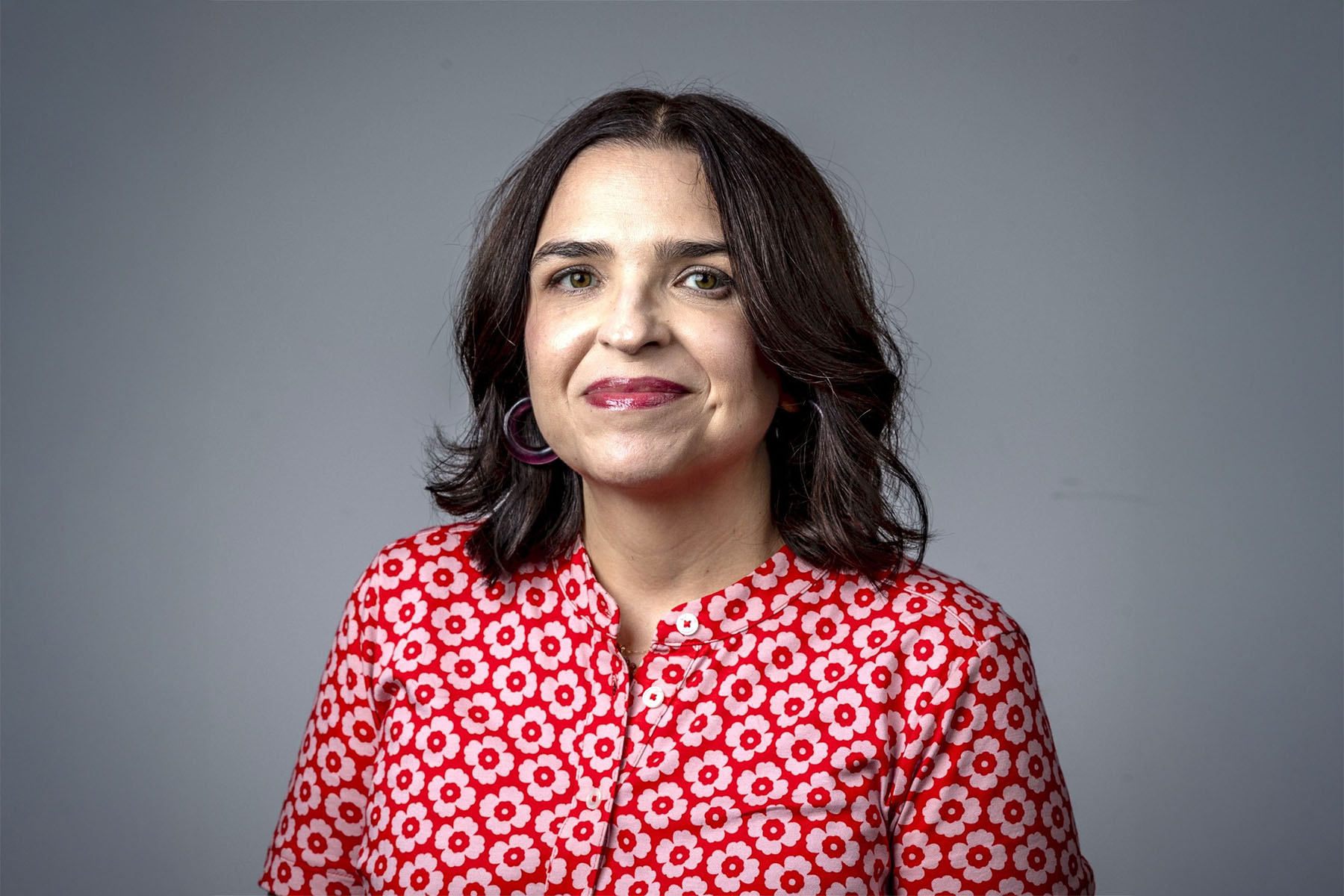
Based in Miami in the United States, Nora Gámez Torres is a journalist at the Miami Herald and El Nuevo Herald, covering Cuba and the Cuban American community.
Despite reporting remotely, Nora is never short of stories to cover.
“The pace of change in Cuban society, in politics, in U.S. policy and in the Cuban exile community seems to have accelerated rapidly.”
Some of Nora’s recent work has covered the expansion of the economic and political power of the Cuban military.
“I published an investigation based on leaked secret financial documents, which showed that GAESA, the economic arm of the Cuban Revolutionary Armed Forces, is responsible for approximately 40 per cent of the country’s GDP and had amassed $18 billion in current assets as of March 2024,” she says.
“That is mind-blowing, especially because Cubans have been struggling with food shortages, lack of medicines and daily blackouts in recent years. The fact that the military has kept this money from other civil branches of the government tells you a lot about who is the ultimate power holder in the country right now.”
Nora did not set out to become a journalist. Instead, she imagined a career as an archaeologist or art historian.
“I was fascinated with the past, not the present. But I had always been drawn to writing, so I enrolled in journalism school at the University of Havana,” she says.
“I soon realised there was little to be dazzled by journalism when your job prospects are working at state media, mainly producing government propaganda.”
Instead, Nora followed a path into academia and teaching at the University of Havana, before winning scholarships to pursue a master’s at the London School of Economics and then a PhD in Sociology at City St George’s.
“I really wanted to understand my country and produce knowledge about it, which, ironically, you could only do if you were studying abroad because of the pervasive censorship in Cuban academia.”
“City St George’s provided me with the resources and the freedom to pursue my research and for that, I am very grateful,” she says.
“Since I wouldn’t be allowed to do fieldwork on the island if I pursued an openly political path of inquiry, I obliquely approached the subject of political and social change in contemporary Cuba by studying popular music. Because of its coded language, popular music had resisted censorship and provided Cubans with a way to voice criticism of the government and try to make sense of their reality.”
After completing her PhD, Nora landed a position first at El Nuevo Herald, the Miami Herald’s sister Spanish-language newspaper, covering Cuba-related issues and then at the Miami Herald itself.
“Journalism was not what I was looking for and yet, it was even better. It has been exhilarating,” she says.
Still unable to report directly from her homeland, how does Nora secure her stories?
“I have done most of my work from Miami, relying on island sources, sources in Washington, Cubans visiting the United States and a few Cuban independent news outlets.”
“It helps that I was born and lived in Cuba and understand the one-party system, that Miami is a hub for everything Cuba-related and that the government has allowed Cubans to have internet access in recent years.”
“I would love to be able to report from inside the country, but even foreign journalists based there face a lot of government-imposed restrictions, so it is not unusual that I am breaking Cuba news stories from Miami.”
Journalism is facing huge challenges, such as AI generation, increasing audience fragmentation and social media algorithms which promote polarisation and disinformation. Considering these pressures, how does Nora maintain her motivation as a journalist?
“I feel a responsibility to convey to American audiences what is happening in Cuba in the best possible way. It is particularly important in the sense that policymakers pay attention to what we publish at the Miami Herald. There is also the incredible opportunity to be able to witness and oftentimes narrate history as it is made.”
“Making an authoritarian government accountable, giving voice to those under political repression and helping people facing an injustice, all of that makes this job very rewarding.”