
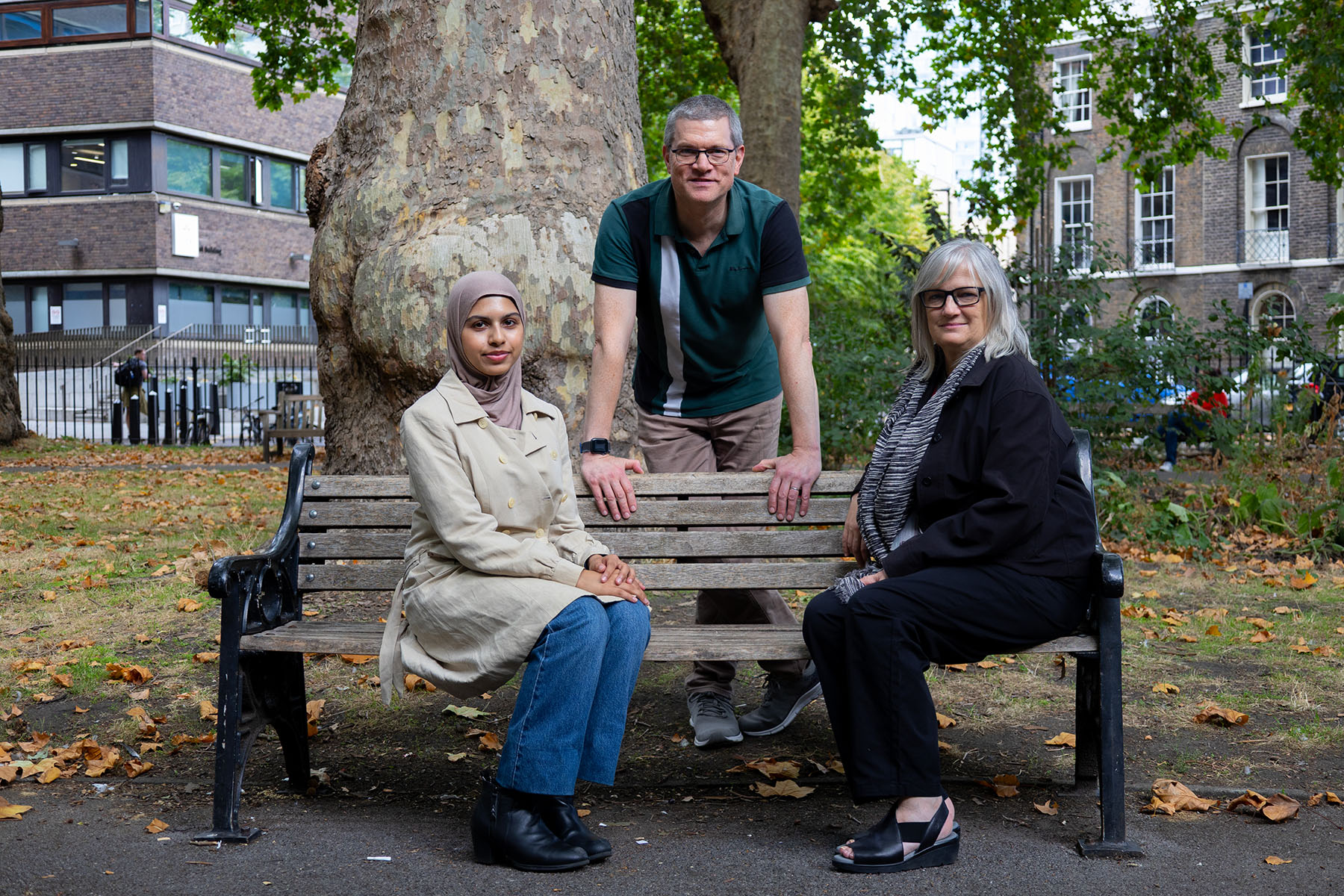
At the recent Graduate Futures Awards (GRAFTAs), a ceremony that highlights innovation and impact in careers and employability across the UK higher education sector, City St George’s was highly commended for its Sustainability and climate change module.
But what is this module and why does it matter? To answer this, let’s start from the very beginning.
It started with an idea
Back in April 2024, City St George’s Learning Enhancement and Development team together with the Sustainability team co-designed and ran a workshop with the hopes of developing an interdisciplinary module focused on sustainability. The aim was simple: to inspire active participation in sustainability.
Moreover, the module aims to meet the growing demand for environmentally-literate graduates. According to the LinkedIn Green Skills Report 2025, the number of ‘green jobs’ is on the rise globally and applicants with ‘green skills’ are significantly more likely to secure employment, getting hired at a global rate of 46.6 per cent higher than the economy-wide hiring rate.
The team also wanted to highlight the positive impact of co-designing the curriculum with staff and students working collaboratively to shape course content.
Hence, staff and students from across various departments and Schools within the University were brought together to consider what the module should look like and how it should be taught. This initial workshop, alongside input from across the University, resulted in the creation of the Sustainability and climate change module, led by Dr Jed Odermatt, Reader at The City Law School, whose research focuses on the intersection of sustainability, interdisciplinary teaching and inclusive curriculum design. The module is also taught by academics from across the University’s six Schools, providing insight into how sustainability and climate change affects different disciplines, sectors and industries.
So, what is the Sustainability and climate change module?
The module introduces students to the major challenges and opportunities associated with sustainability; utilising the expertise and perspectives from across the University, including climate science, technology, economics, business responsibility, law, psychology, ethics and social activism.
The module also goes beyond the classroom. Alongside lectures from academics and professional experts, students also work in teams to tackle real-world sustainability challenges set by external organisations, enabling them to apply their learning in practice while developing skills in collaboration, problem-solving, project management, critical thinking and experience in relevant technologies.
Project Partners have included Anglian Water (water services), Bedfordshire Police (law and order), Enterprise Mobility (mobility and transportation), ExoticSkn (Health, Wellbeing and beauty) and Magenta Associates (pr and communications).
Through this innovative and collaborative approach, students examine the scientific, economics, cultural, legal, moral and ethical dimensions around sustainability and climate change.
Moreover, the module is part of the University’s Career Activation Programme of credit-bearing employability-focused modules open to all undergraduate students at City St George’s. The initiative is part of the University’s commitment to ensure our students gain the experience, knowledge and valuable skills they need to strengthen their CVs and get a head start on the career they want. This programme has proven to be a success, so much so, work is already underway to create a similar opportunity for postgraduate taught students.
But okay, now that we know what the module is all about, let’s circle back to the GRAFTAs…
What does this award mean for City St George’s?
Well, who better to ask than Module Leader, Dr Jed Odermatt, who said: “It has been incredibly rewarding to develop partnerships with a range of organisations, enabling students to apply their knowledge to real-world sustainability challenges.
“From encouraging better recycling behaviours to developing ways to measure the environmental impact of AI, these collaborations provide students with invaluable practical experience, helping them build confidence and develop the skills to navigate complex sustainability challenges.”
In short, this award highlights the University’s continued commitment to equipping students with the skills, knowledge and experience needed to make a positive contribution to society and to respond to some of the biggest challenges facing employers and communities today.
The project was also the successful recipient of a Teaching and Research Award from another rather witty acronym-ed establishment, the University of London’s Centre for Online and Distance Education (CODE), which will enable the team to study the impact of the module’s innovations.